
Tooth discolouration falls into two categories: extrinsic and intrinsic. Extrinsic staining sits on the outer surface of the enamel and is caused by food, drinks, and lifestyle habits. Coffee, tea, red wine, and smoking are the most common culprits. This type of staining responds well to whitening treatment.
Intrinsic discolouration sits deeper, within the dentine layer beneath the enamel. It can result from certain medications, trauma to the tooth, or natural changes in tooth structure over time. Intrinsic staining is harder to treat and may require a different clinical approach.
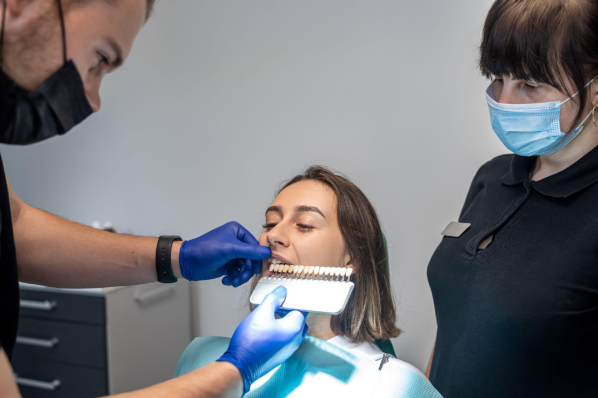
A dentist can tell you, at a consultation, which type you are dealing with and whether whitening is likely to produce the result you are hoping for. That assessment alone is worth the conversation.
The most important distinction between professional and over-the-counter whitening is the concentration of the active ingredient. In the UK, only registered dental professionals are legally permitted to use or supply whitening gels with a hydrogen peroxide concentration above 0.1%. Professional treatments use gels significantly stronger than anything available in a pharmacy or online, which is why the results are faster, more even, and longer lasting.
Over-the-counter strips and kits contain low concentrations that produce gradual, modest improvements. They can be a useful maintenance tool after professional treatment, but they are unlikely to deliver meaningful whitening on their own, particularly on deeper or older staining.
There is also a safety dimension. Whitening products used without a dental assessment carry a risk of gum irritation, uneven results, and sensitivity, particularly if they are applied without custom-fitted trays. A dentist fits trays precisely to your teeth, which keeps the gel where it needs to be and away from soft tissue.
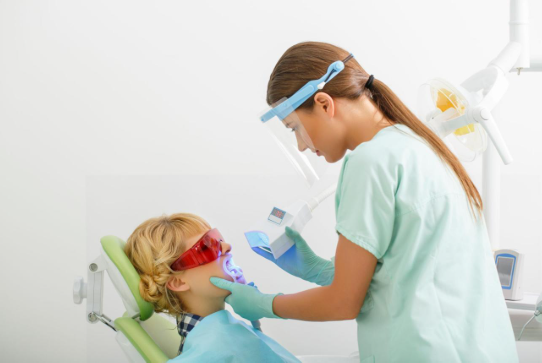
In-chair whitening is carried out at the practice in a single appointment, typically lasting around an hour. A higher-concentration gel is applied directly to the teeth and, depending on the system used, may be activated with a light source. Results are visible immediately. This is the fastest route to a noticeably whiter smile and suits patients who want a specific outcome before an event or occasion.
Take-home treatment uses custom-fitted trays made from an impression of your teeth, combined with a professional-grade whitening gel that you apply at home over a period of one to two weeks. The trays ensure even coverage and minimise contact with the gums. Results build gradually and, for many patients, the final outcome is comparable to in-chair treatment. The trays can also be reused for top-up treatment later, which makes this option good value over time.
Some practices offer a combined approach, starting with an in-chair session and following up with take-home trays. This accelerates the initial result while extending and maintaining it.
Realistic expectations matter. Professional whitening can make teeth several shades lighter, but the exact result depends on the original shade, the type of staining, and how your enamel responds to the gel. Teeth with heavy intrinsic staining may see more modest improvement. Crowns, veneers, and composite bonding do not whiten, so if you have existing restorations, your dentist will discuss how whitening might affect the overall appearance.
Sensitivity during and after treatment is common and usually temporary. Most patients experience some sensitivity for a day or two, which resolves without intervention. If you have a history of sensitive teeth, let your dentist know before treatment begins so they can adjust the protocol accordingly.
Results from professional whitening typically last between one and three years, depending on diet and lifestyle. Avoiding staining food and drink in the first 48 hours after treatment, and keeping up with hygiene appointments, will extend the result considerably.
At Smile Art Dental Broadway, teeth whitening is provided by qualified dental professionals following a full assessment of your oral health. Treatment is not offered until your dentist is satisfied that your teeth and gums are in good condition, because whitening on unhealthy enamel or in the presence of untreated decay is not appropriate.
We offer both in-chair and take-home whitening options, and your dentist will recommend the approach that fits your starting shade, your timeline, and what you are hoping to achieve. Custom trays are made in-house to ensure a precise fit, and we use professional-grade whitening systems that are proven to be safe and effective.
If you are considering cosmetic dentistry more broadly, whitening is often the first step before treatment such as Invisalign or composite bonding, because it establishes the shade you want to maintain.
Tooth discolouration falls into two categories: extrinsic and intrinsic. Extrinsic staining sits on the outer surface of the enamel and is caused by food, drinks, and lifestyle habits like coffee, tea, red wine, and smoking. This type responds well to treatment. Intrinsic discolouration sits deeper within the dentine layer and can result from medications, trauma, or aging, making it harder to treat.
The main difference is the concentration of the active ingredient. In the UK, only registered dental professionals can legally supply whitening gels with a hydrogen peroxide concentration above 0.1%. Professional treatments use much stronger gels for faster, more even, and longer-lasting results. Over-the-counter kits have low concentrations and carry a higher risk of gum irritation or uneven results without custom-fitted trays.
In-chair whitening is carried out at the dental practice in a single appointment, typically lasting around an hour. A higher-concentration gel is applied directly to the teeth and may be activated with a light source. Results are visible immediately, making it ideal for patients wanting fast results before a specific event.
Take-home treatment uses custom-fitted trays made from an impression of your teeth. You apply a professional-grade whitening gel at home over a period of one to two weeks. The trays ensure even coverage and minimise contact with the gums, delivering gradual results comparable to in-chair treatment. The trays can also be reused for future top-ups.
The combined approach starts with an immediate in-chair whitening session at the clinic and follows up with take-home trays. This method accelerates your initial results while extending and maintaining them for longer.
Professional whitening can make teeth several shades lighter, but the exact result depends on your starting shade, enamel response, and type of staining. Note that crowns, veneers, and composite bonding do not whiten. Temporary sensitivity is common for a day or two after treatment.
Results typically last between one and three years, depending on your diet and lifestyle. Avoiding staining foods and drinks for the first 48 hours after treatment, alongside regular dental hygiene appointments, will significantly extend your results.
At Smile Art Dental Broadway, whitening is safely provided by qualified dental professionals following a full oral health assessment. We offer in-house custom trays, safe professional-grade systems, and both in-chair and take-home options tailored to your individual timeline and aesthetic goals.


