
Choosing dental implants isn't just about replacing a missing tooth. You're choosing a treatment plan, a dental team and a long-term way of caring for your smile.
So before you book, it makes sense to ask a few questions. The cheapest treatment isn't always the simplest option, and a headline price doesn't always tell you what is included. A good consultation should give you a clear picture of your options, what the treatment involves and what you can expect afterwards.
If you're considering tooth implants in London, here are seven questions worth asking before you make a decision.
Tooth implants can be used to replace one missing tooth, several missing teeth, or to support a bridge or denture. But they aren't automatically the right choice for everyone.
Your dentist will look at your teeth, gums, available bone and general health, since smoking and existing dental problems can affect whether implant treatment is suitable. In some cases, gum treatment or a bone graft is needed before an implant can be placed, as Leeds NHS explains in more detail on implant assessment.
The important question isn't simply, "Can I have an implant?" It is whether an implant is a suitable and safe way to replace your missing tooth in your particular situation.
Don't be afraid to ask who will be involved at each stage of your treatment. You should know who will assess you, who will plan the treatment, who will place the implant and who will provide the final restoration.
It's also reasonable to ask about the dentist's qualifications, training and experience with the treatment you are considering. The GDC guidance explains the importance of accurate, clear and honest information about dental professionals and their services.
A good consultation should leave you understanding who will look after you and what happens at each stage.
An implant is not just one appointment. Your treatment may involve assessment, scans, planning, implant placement and the final crown, bridge or denture. Some patients may also need treatment before the implant can be placed.
Ask the practice to explain the full treatment plan and what is included in the quoted cost. This can help you compare options properly rather than comparing one headline figure with another.
Smile Art Dental's implant page states that patients receive a treatment strategy following consultation, setting out the available options and associated costs.
Dental implants are designed to act as an artificial tooth root, with a restoration placed on top. NHS guidance explains how implants are used to replace missing teeth. There are different implant systems available, so it's worth asking which system your dentist recommends and why.
You don't need to choose an implant system based on the brand name alone. Instead, ask how it fits your treatment plan and what type of restoration will be used.
Smile Art Dental uses Straumann and ASTRA TECH implant systems.
There isn't one answer to this, because implant treatment happens in stages, and how many you need depends on where you're starting from. Replacing a single tooth in a healthy jaw is usually the quickest route. Needing a bone graft first, or replacing several teeth, adds time to the process.
Leeds NHS explains why the wait matters: the implant has to heal and properly integrate with your jawbone before the final crown, bridge or denture is fitted, and that isn't something that can be sped up safely. Guy's and St Thomas' NHS Foundation Trust puts a full course of treatment, from assessment through to the finished restoration, at roughly six months to a year.
Ask your dentist to walk you through what happens at each stage and roughly when, and whether you'll have a temporary tooth in place while the implant heals. A realistic timeline is the difference between planning appointments around a holiday and finding out three months in that you can't.
Cost is an important part of any treatment decision, but it shouldn't be the only thing you compare.
When you are looking at tooth implants in London, ask what the quoted price includes. Does it cover the consultation, scans, implant placement, abutment, crown or other restoration, temporary teeth and follow-up care? If additional treatment could be needed, ask how that would affect the cost.
Rather than looking only for the lowest headline price, make sure you understand exactly what you are being offered.
Getting the implant is only part of the process. You'll still need to look after your teeth and gums and attend the recommended follow-up appointments.
Ask what aftercare is included, how often you should have your implants checked and what you should do if you notice discomfort, movement or another change.
Your dentist should also explain how to keep the area clean and how your ongoing oral care fits into your normal dental routine.
No. Bridges and dentures are still perfectly valid ways to replace a missing tooth, and for some people they're the better fit, not a fallback. NHS guidance sets out the alternatives alongside implants.
A bridge uses the neighbouring teeth for support and stays fixed in your mouth. A denture is removable, comes out at night, and doesn't rely on any other teeth to hold it in place, which matters if those teeth aren't in great shape to begin with.
Which one actually suits you depends on how much bone and gum you have to work with, how many teeth need replacing and, realistically, what you're comfortable living with day to day. That's the conversation a proper consultation should cover, not just which option costs less.
If you're considering tooth implants in London, don't feel you have to make a decision based on a single price, a before-and-after photo or a quick online search.
Start with the basics. Find out whether you're suitable for implants, who will carry out your treatment, what your plan includes, which implant system is being used, how long treatment is expected to take, what the full cost covers and what happens after treatment.
If you're also comparing other ways to improve your smile, you can explore Invisalign treatment or teeth whitening before deciding which treatment is right for you.
For implant-specific information, visit Smile Art Dental's tooth implants page or contact the North London practice to arrange a consultation.

A peer-reviewed systematic review published in the Journal of Dentistry by the University of Dundee, dental implants have a 10-year survival rate of 96.4% — making them one of the most reliable tooth replacement options available today. But survival rate and longevity are two different things, and if you're considering tooth implants in London, understanding that distinction could save you from an expensive surprise further down the line.
Here's what the research, and real clinical experience, tells you.
When patients ask how long tooth implants last, the truthful answer is: anywhere from 15 years to a lifetime, and the difference usually comes down to three factors.
A dental implant is a titanium post that fuses directly with your jawbone through a process called osseointegration. When that process is carried out correctly by an experienced implantologist, the implant itself can last decades.
When it isn't, whether due to poor positioning, inadequate bone assessment, or rushed treatment planning, the risk of early failure climbs significantly.
At Smile Art Dental, every implant case begins with a thorough assessment of your bone density, gum health, and overall oral condition before treatment is recommended. That upfront work helps to determines whether your implant will bond properly and hold for the long term.
The titanium implant post is only part of the story. The visible crown attached to it (the part that functions like a real tooth) typically lasts between 10 and 15 years before it may need replacing, depending on wear and how well it's maintained. This is an important distinction patients often miss: the implant beneath the gum can outlast multiple crowns above it. Asking your dentist about crown material and expected lifespan is a sensible question before you commit.
This is the factor patients control entirely. Implants don't decay the way natural teeth do, but the gum and bone surrounding them absolutely can deteriorate, a condition called peri-implantitis, which is essentially gum disease around an implant. Left untreated, it's the leading cause of implant failure in otherwise successful cases.
The good news is that it's almost entirely preventable. Brushing twice daily, flossing or using interdental brushes around the implant, and attending regular hygiene appointments are the three habits that protect your investment more than anything else.
If you're searching for tooth implants in London specifically, you're in a market with a wide range of providers. You’ll find high-street chains offering cut-price treatment to specialist practices with full diagnostic facilities on site. The price gap can be large, and it's tempting to focus on the lower end, particularly given the cost-of-living pressures most Londoners are navigating.
But implant treatment is one area where the economics genuinely favour doing it properly the first time. Revision surgery — removing a failed implant, allowing the site to heal, and starting again — costs considerably more than the original treatment and extends your timeline by months. The cheapest quote rarely accounts for the full clinical picture: cone beam CT scans, bone grafting if needed, the implant post, the abutment, and the final crown are separate cost items that vary between providers.
A transparent, itemised treatment plan before you sign anything is a reasonable expectation and a mark of a trustworthy practice.
Not every patient who wants tooth implants in London is immediately ready for them, and a good implant dentist will tell you that upfront rather than proceed anyway.
Insufficient bone volume is the most common barrier. When a tooth has been missing for some time, the jawbone beneath it naturally resorbs. In these cases, a bone graft may be needed before an implant can be placed, adding time and cost to the process. Similarly, uncontrolled gum disease, certain medications, and conditions like unmanaged diabetes can affect osseointegration and need to be addressed first.
None of these are permanent disqualifiers, they're factors to work through with a clinician who takes a thorough view of your overall oral health before recommending a path forward.
A tooth implant placed well, maintained properly, and supported by regular dental care can genuinely last a lifetime. The titanium post that fuses with your jaw doesn't have an expiry date — biology and behaviour determine how long it serves you.
For London patients weighing up the decision, the most important step isn't finding the lowest price. It's finding a practice with the clinical experience to plan your treatment properly, the honesty to tell you if you're not yet ready, and the aftercare structure to support you once your implant is in place.
Smile Art Dental provides personalised implant treatment designed around long-term oral health, function, and aesthetics. Our team focuses on careful treatment planning, modern dental technology, and ongoing aftercare to help patients achieve lasting implant success.
If you're considering tooth implants in London, Smile Art Dental can help you find the right treatment for your smile.
57% of UK adults have at least one missing tooth. Of those who haven't replaced it with an implant, the two most common reasons aren't medical, 43% say cost, and 20% say their dentist never brought it up.
That second figure is worth sitting with. One in five people who needed implants simply weren't told they were an option.

According to the NHS, dental implants are usually only available privately. In London, a single implant typically ranges from £1,800 to £3,000 covering the implant, abutment, and crown, with prices varying depending on case complexity.
What most people don't factor in is the comparison over time. Dentures and bridges typically need replacing or adjusting every few years. An implant, with straightforward maintenance, can last decades. The upfront cost looks different when spread across a 20-year lifespan.
Yes, in the sense that matters most. The titanium post fuses directly with the jawbone through a process called osseointegration, becoming a fixed part of your jaw rather than sitting on top of it. The crown — the visible part — may eventually need replacing after many years of wear, but the implant itself is designed to be a long-term solution, not a temporary fix.
This also means implants do something dentures and bridges can't: they preserve the jawbone. When a tooth is lost and not replaced, the bone beneath it gradually deteriorates because there's no longer any root stimulating it. An implant replicates that stimulation, stopping the deterioration before it affects neighbouring teeth or the structure of your face.
The procedure is carried out under local anaesthetic, so during the placement itself you should feel pressure but not pain. Most patients report that the recovery is more manageable than they expected — some discomfort and swelling in the days following, similar to a tooth extraction, which settles with over-the-counter pain relief.
The fear of pain is one of the things that delays people longest. For patients who are particularly anxious, conscious sedation is available, which means you remain awake but in a deeply relaxed state throughout.
Longer than most people expect, though not for the reason they think. The procedure itself is straightforward, but after the implant is placed the bone needs time to fuse with the titanium — a process that takes three to six months. During that period, you'll have a temporary restoration fitted so there's no visible gap, and then the permanent crown is placed once healing is confirmed.
If additional work is needed beforehand — bone grafting, for example — that adds time to the front end of the process. The total treatment from first consultation to final crown can range from a few months to closer to a year in more complex cases, but each stage is spaced out rather than intensive.
Most adults in good general health are suitable candidates. The main clinical requirements are sufficient bone density to support the implant and healthy gums — and as we've covered previously, even patients with some bone loss have options, including grafting, to rebuild the foundation before placement.
Smoking and uncontrolled diabetes are the two factors most likely to affect healing and long-term success, and both are worth discussing openly at consultation. They don't automatically rule out implants, but they do require honest conversation about managing risk.
A consultation doesn't commit you to anything — it tells you where you stand. At SmileArt Dental, we use 3D CBCT imaging to assess your bone structure precisely before recommending any treatment, so the plan we put in front of you is based on your actual anatomy rather than a general estimate.
If cost has been the sticking point, it's worth knowing that payment plans are available, and the conversation about what's realistic for your budget is one we're comfortable having.
Losing a tooth is stressful enough but discovering that you also have jawbone loss can feel incredibly discouraging. Many of our patients at Smile Art come to us feeling worried that their bone loss has permanently disqualified them from getting a permanent, natural-looking smile.
If you are dealing with this exact concern, we want to validate those worries, it is completely normal to feel overwhelmed by dental complications. However, we also want to give you the honest, factual reality: Yes, you can absolutely get dental implants even if you have bone loss. Here is everything you need to know about how the team at Smile Art restores both your jaw's foundation and your confident smile.
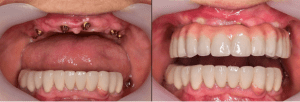
To understand the solution, it helps to understand the problem. Just like muscles atrophy when they aren't used, your jawbone begins to deteriorate when a tooth is missing.
The roots of your natural teeth stimulate the jawbone every time you chew. When a tooth is extracted or falls out, that stimulation stops. Over time, the body assumes the bone in that area is no longer needed and begins to resorb (reabsorb) it. Gum disease (periodontitis) or severe trauma can also rapidly accelerate this bone loss.
Important Note: Because dental implants act as artificial tooth roots, they prevent further bone loss once placed. The challenge simply lies in making sure there is enough bone density to hold the implant securely in the first place.
If an assessment reveals that your jawbone is currently too thin or soft to support an implant, it just means we need to do a little prep work before placing the new tooth. Modern dentistry offers highly successful techniques to rebuild your foundation:
Because treating bone loss requires extra precision, expertise, and advanced imaging, choosing the right clinic is crucial. It’s not just about placing a titanium post; it’s about architecting a foundation that will last you a lifetime.
If you are searching for reliable tooth implants in London, Smile Art specializes in advanced restorative dentistry. We don't believe in one-size-fits-all solutions. We use state-of-the-art 3D CBCT scanners to map your jawbone down to the millimetre, ensuring we approach your unique bone structure with absolute candour, safety, and predictability.
We will walk you through exactly what your timeline looks like. If you need a graft, the process will take a bit longer—but the lifelong results are well worth the patience.

Don't let the fear of bone loss stop you from exploring your options. Dentistry has evolved immensely, and a missing tooth doesn't have to dictate your confidence or your diet. If you've been told in the past that you don't have enough bone for an implant, it is entirely possible that modern techniques can still rebuild your smile.
To find out exactly what is possible for your unique jawbone structure, book a comprehensive consultation with our expert team. Visit Smile Art Dental to schedule your assessment today.
When patients come into our clinic for a smile makeover, they almost always want their teeth both straight and white as fast as possible. But if you rush in and mix up the order of these two treatments, you risk wasting money on uneven, patchy results.
When exploring your options, you may find yourself faced with a dilemma. You want straighter teeth, and you want them to be brighter. So, which comes first? Can you do them at the same time? If you do one before the other, are you risking uneven results?
Combining treatments is incredibly common at our North London clinic. In this guide, we’ll walk you through exactly how to sequence your treatments to get a flawless, lasting result without wasting time or money.

Let’s cut right to the chase: the golden rule of a smile makeover is to straighten first and whiten second.
It’s tempting to want immediate results by bleaching your teeth on day one. But if you have overlapping or crowded teeth, whitening gel simply can’t reach every surface. If you whiten first and then move your teeth into proper alignment later, you’ll end up exposing darker, un-whitened areas that were previously hidden by the overlap.
On top of that, many orthodontic treatments involve bonding tiny, tooth-coloured "attachments" to the front of your teeth to help the aligners grip and move them. If you try to whiten while these attachments are on, you’ll end up with visible yellow squares once they’re removed.
By fixing the foundation first, you ensure that your final brightening treatment works evenly across a beautifully aligned canvas.
Getting your teeth perfectly aligned is the heavy lifting of your makeover. If you’re looking for discreet, comfortable orthodontics, Invisalign treatment London has become the gold standard option for patients seeking predictable, aesthetic results.
There’s a reason this system is so popular, and it goes beyond just looking invisible. Recent clinical studies demonstrate that Invisalign achieves an impressive 96% success rate in reaching the desired orthodontic outcomes, provided patients maintain their 22-hour daily wear schedules. The research shows that clear aligners aren’t just for simple aesthetic tweaks; they are highly effective at correcting complex crowding, spacing, and mild to moderate bite issues.
The process starts with a 3D digital scan of your mouth. We use this to map out a precise, step-by-step transformation. Because the aligners are clear and removable, you can go about your professional and social life without the self-consciousness that often comes with traditional metal brackets.
If you’re still on the fence about the hardware, you can read more about why this system is so effective in our post.
The timeline for this phase varies. Minor crowding might be resolved in three to six months, while more complex bite corrections can take 12 to 18 months. Once your teeth are sitting perfectly in their new positions and any attachments are polished off, you are ready for phase two.

Straight teeth naturally catch the light better, making your smile look instantly more radiant. But to get that truly flawless finish, professional whitening is the final step.
When searching for the best teeth whitening in London, it’s vital to trust a dental professional rather than relying on over-the-counter kits or social media trends. Professional treatments are backed by clinical research and delivered under professional supervision, ensuring maximum results with minimal discomfort.
Clinical research evaluating the efficacy of carbamide peroxide and hydrogen peroxide (the active ingredients we use in professional whitening) consistently shows that both are highly effective at breaking down deep intrinsic stains that regular toothpaste can’t touch. More importantly, studies confirm that 10% carbamide peroxide used in custom at-home trays provides incredible, long-lasting brightness while significantly reducing the tooth sensitivity often associated with higher-concentration, unregulated bleaching gels.
At Smile Art Dental, we tailor the whitening process to your specific needs. Whether we use an in-clinic laser treatment to jumpstart the process or provide you with custom-fitted trays to use at home, doing this after your alignment is complete guarantees an even, dazzling result.
Curious about the psychological and social benefits of this final step? We dive deep into that in our article, Best Teeth Whitening in London: What a Brighter Smile Really Changes.
We hear this question a lot, especially from patients who are on a strict timeline for a major life event. "Can I whiten my teeth while I’m still wearing my aligners?"
The honest answer is sometimes, but it requires careful planning with your dentist.
If your orthodontic plan doesn’t require any attachments on your front visible teeth, your dentist might give you the green light to use a mild whitening gel inside your aligners toward the very end of your treatment. Since aligners are custom fitted to your teeth just like whitening trays, they can occasionally pull double duty.
However, if you have attachments, you must wait until they are removed. Rushing the process will only lead to uneven, blotchy results that are frustrating to fix. Patience here pays off immensely.
If you’re planning a smile makeover for a specific deadline, you need to work backward. Here’s a rough breakdown of what your timeline might look like:
If you have a wedding or a big event in six months, book your consultation now. Time flies, and orthodontic tooth movement can’t be rushed safely.
Once you’ve put in the time and investment to build your dream smile, you want to keep it that way. Maintenance comes down to two simple things: retention and lifestyle.
First, you will need to wear your retainers (usually only at night) to ensure your teeth don’t drift back to their old, crooked positions. Your teeth have a natural tendency to shift, and without retainers, they will gradually move back towards their previous positions.
Second, maintaining that bright shade requires a bit of awareness. Coffee, tea, red wine, and dark berries are the biggest culprits for staining. You don’t need to cut them out of your life, but simply drinking water alongside your morning coffee, or using a straw for iced lattes, can drastically prolong your whitening results. Plus, you can occasionally use your custom retainers to do a quick weekend whitening touch-up!
A complete smile makeover isn’t just about aesthetics; it’s about giving yourself the freedom to laugh, speak, and smile without a second thought.
If you’re ready to explore your options, our team at Smile Art Dental is here to help. We’ll assess your teeth, listen to your goals, and build a personalised timeline that works for you.

Invisalign has become a popular option for adults because it is discreet, removable, and easier to fit into everyday life than traditional braces. People like that it does not draw attention, that meals are unaffected, and that treatment can continue alongside work and social routines without much disruption.
That convenience, however, often leads to the quiet assumption that Invisalign is simple to manage. Because the aligners are comfortable and removable, it is easy to treat them as forgiving or flexible, rather than as precise appliances that rely on consistency to work properly.
In practice, this is where most problems begin. Invisalign is effective, but it is also exact, and small decisions made during treatment tend to matter more than people expect, especially when those decisions are repeated over time.
Most of the issues that arise during Invisalign treatment are not sudden or dramatic. They develop slowly, often without anything feeling obviously wrong, until progress stalls or the final result does not quite match what was originally planned.
One of the most common patterns we notice is aligners being worn inconsistently, even though, from the patient’s point of view, it feels reasonable. Aligners are worn on most days, removed for meals, and sometimes left out longer than intended, until a busy afternoon becomes an evening without aligners or a social event stretches into half a day.
Taken on their own, these moments seem harmless. Over time, however, they interrupt the steady pressure Invisalign relies on, and when that pressure is broken too often, teeth begin to hesitate, movement slows, and progress becomes less reliable even though everything still appears fine.

Another issue we see is aligners being treated as flexible tools rather than precise appliances. Because they can be removed and are generally comfortable, it is easy to assume they are forgiving.
In reality, each aligner is designed to carry out a specific step in a carefully planned sequence, and that sequence depends on timing as much as it depends on fit. Wearing an aligner for too long, switching too early, or skipping ahead disrupts that sequence, and teeth do not respond well to guesswork.
When this happens, the effects are not always obvious straight away. More often, they show up later as delays, extra refinement stages, or teeth that do not settle as neatly as expected.
Oral hygiene is another area where Invisalign’s convenience can quietly work against people. Aligners sit closely against the teeth for most of the day, and if plaque or food debris is trapped underneath, it stays there longer than it otherwise would.
Many adults already have established brushing habits, so they assume nothing needs to change. What we often see instead is that small lapses matter more during treatment, particularly when aligners are worn regularly but teeth are not cleaned thoroughly before they are put back in.
Over time, this can affect gum health and increase the risk of decay, even in patients who normally take good care of their teeth.
There is also a common misunderstanding at the end of active treatment. Teeth are straighter, aligners are finished, and attention moves elsewhere. Teeth, however, have a natural tendency to shift unless they are held in place.
Retention is not an optional extra. It is part of treatment. When it is taken seriously, results tend to last. When it is treated lightly, teeth often begin to move back toward where they started, sometimes more quickly than people expect.
Most of these issues do not come from a lack of care or effort. They come from underestimating how precise Invisalign needs to be. Because the system fits easily into daily life, it is easy to assume it behaves casually.
In reality, Invisalign works best when small details are respected. Consistency, regular follow-up, and clear communication all matter.
At Smile Art Dental, Invisalign treatment in London is approached with this understanding. The focus is not only on aligning teeth, but on helping patients understand what supports good outcomes and what quietly works against them, so treatment feels manageable and results make sense, rather than coming as a surprise.

Many people live with discoloured teeth for years without realising how much it affects them. They laugh tightly, avoid smiling fully, or hesitate before speaking in close conversations. Over time, these habits stop standing out. They just become part of daily life.
Most people who search for the best teeth whitening in London are not chasing perfection. They want to feel comfortable with their smile again.
Teeth rarely change colour overnight; instead, each tooth slowly starts to discolour, and most people overlook this.
Drinks such as tea, coffee, red wine, and fizzy drinks can gradually stain the enamel. Smoking and tobacco use can cause darker, more stubborn marks. Over time, natural wear also plays a role. Additionally, as you age, your enamel gets thinner, which reveals the darker layer underneath and gives your teeth a yellow or dull appearance.
In some cases, discolouration is linked to medication, illness, or previous dental treatment. These internal stains behave differently from surface stains and may not respond in the same way to whitening.
Understanding why your teeth have changed colour is an important part of deciding whether whitening is right for you.
Many whitening products promise quick and easy results, and while that can be possible, most of these options are designed for the masses, which means they may not work for everyone.
Ill-fitting trays, weaker whitening agents, and lack of professional guidance often lead to uneven results. Some people experience sensitivity without seeing much improvement. Others find that certain teeth do not whiten at all, particularly if they already have fillings, crowns, or veneers. This is often when people realise that whitening is not just about making teeth whiter. It is about doing so safely and predictably.

At Smile Art Dental, professional teeth whitening begins with conversation and assessment, not treatment. The first thing your dentist does is check your teeth and gums and ask you what type of results you want. This approach gives you a result that looks natural, not one that appears overly bright or artificial.
Sensitivity is one of the most common concerns people have about whitening. While mild sensitivity can occur, professional whitening allows this to be managed carefully. At Smile Art, we monitor your treatment closely and adjust as necessary. We also offer advice on what to do during and after getting your teeth whitened.
It is also important to understand what whitening can and cannot do. Existing dental work will not change colour, and some deeper stains may respond differently. Clear, honest guidance helps avoid disappointment and keeps expectations realistic.
Whitening is not just measured by how white teeth become, or how quickly that change happens. It is measured by whether the treatment feels appropriate for you.
The best teeth whitening in London is one that works gently with your teeth and gums, improving your smile in a way that feels natural and comfortable rather than forced.
Maintaining a Brighter Smile Over Time
Well-done whitening tends to fade into the background. It brings back brightness without looking obvious.
Although whitening does not last forever, results can be supported with everyday care. Brushing properly, seeing your dentist regularly, and limiting frequent staining drinks all help.
Depending on lifestyle, some people choose occasional top-ups to maintain their results.
At Smile Art Dental, teeth whitening is approached with that perspective in mind. The focus is on understanding the teeth first, then choosing treatment with comfort and long-term health in mind.
When whitening is approached this way, the result is often understated. It supports confidence without becoming the main focus.


